For anyone who enjoys the freedom of the open road, having access to clean, safe drinking water is essential. Whether you’re camping at a remote site or parking at an RV resort, water quality can vary greatly. That’s why RV water purification systems are a must-have. They not only protect your health but also safeguard your appliances and plumbing from sediment, chlorine, and other contaminants. In this article, we’ll walk you through how to install and maintain your RV water filter system so you can enjoy fresh, great-tasting water wherever your travels take you.
Why RV Owners Need a Water Filter
RV life is all about mobility, but with mobility comes uncertainty—especially when it comes to water sources. Some campgrounds provide water with high chlorine levels, while others may have issues with sediment, rust, or even bacteria. Using a reliable camper water filter ensures:
- Safe drinking water: Removes harmful contaminants before they reach your glass.
- Better taste and smell: Reduces chlorine and other chemicals that affect water flavor.
- Appliance protection: Keeps your RV’s plumbing, faucets, and water heater free of buildup.
A good water filter system is not just a convenience—it’s peace of mind.
Choosing the Right RV Water Filter System
There are several types of water filters available for RV owners:
- Inline Water Filters – Easy to attach directly to your hose, these provide basic filtration for sediment and chlorine.
- Canister Systems – Often more powerful, these use cartridges for deeper filtration, including lead and bacteria.
- Reverse Osmosis Water Filters – Advanced systems that remove up to 99% of contaminants, delivering bottled-water quality right from your RV’s tap.
When deciding, consider your camping style. If you often park at sites with questionable water quality, investing in a more advanced filter system makes sense.
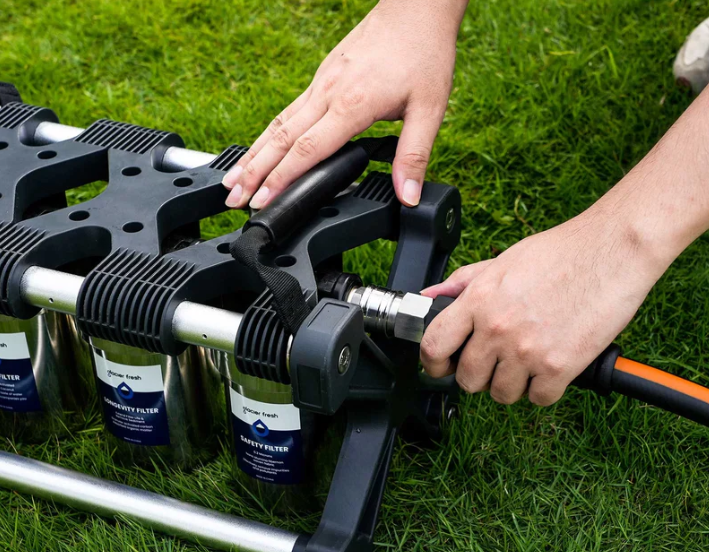
One recommended option is the GlacierFresh RV Water Filtration System. It’s designed specifically for RV use, compact enough to fit easily into your setup, and powerful enough to handle chlorine, sediment, and heavy metals. With its long-lasting filter cartridges, it’s a hassle-free solution for travelers who want reliable, clean water.
Step-by-Step: Installing Your RV Water Filter
Installing an RV water filter system is generally straightforward. Here’s a step-by-step guide:
- Turn Off the Water Supply – Before making any connections, shut off the campground or onboard water source.
- Attach the Filter – Connect the water filter to your RV’s hose or directly into the main water line, depending on the system type.
- Check the Flow Direction – Most filters have arrows indicating water flow; make sure you install it correctly.
- Flush the Filter – Run water through the system for a few minutes to remove carbon dust or packing residue.
- Reconnect and Test – Once flushed, connect the filter fully and test for leaks.
With a product like the GlacierFresh system, installation is simple—it comes with user-friendly fittings and instructions, so even first-time RVers can set it up without stress.
Maintaining Your RV Water Filter System
Like all equipment, RV water filter systems require regular maintenance to stay effective. Here’s what you should keep in mind:
- Replace Filters on Time – Depending on the filter type, you may need to replace cartridges every 3–6 months, or after filtering a certain number of gallons.
- Monitor Water Pressure – If you notice a drop in flow rate, it might be time to change the filter.
- Sanitize the System – Once or twice a year, sanitize your water lines and filter housing with an RV-safe cleaning solution.
- Winterize Before Storage – If you store your RV during colder months, remove the filter to prevent freezing damage.
Pro tip: Keep a spare filter cartridge in your RV. This way, you’re never caught without clean water, even on longer trips.
Tips for Getting the Most Out of Your RV Water Filter
- Use a Pre-Filter: Adding a sediment pre-filter before your main water filter can extend its lifespan.
- Test Your Water: If you travel often to new locations, use a water test kit to check for contaminants.
- Pair with a Softener: For hard water regions, consider a portable water softener to reduce scale buildup.
- Stay Consistent: Make filter checks part of your regular RV maintenance routine.
By staying proactive, your water filter will keep delivering safe, great-tasting water trip after trip.
Conclusion
Clean water is non-negotiable when living life on the road. A dependable RV water filter system not only ensures your health but also keeps your RV’s plumbing in top shape. Installing and maintaining your filter doesn’t have to be complicated—especially with reliable products designed for RVers.
If you’re ready to upgrade your setup, the GlacierFresh RV Water Filtration System is an excellent choice. Built for travelers who want confidence in every sip, it delivers performance, convenience, and peace of mind wherever your adventures lead.
With the right system in place, you can enjoy your travels without worrying about water quality—leaving you free to focus on what really matters: the journey.