Across the United Kingdom, the push toward a greener and more resilient energy system is gaining unstoppable momentum. With ambitious government goals under the Net Zero 2050 strategy and increasing household adoption of solar power systems, electric vehicles (EVs), and off-grid energy solutions, the country is undergoing a rapid transformation in how it produces, stores, and consumes electricity. But one crucial factor determines how successful this transition will be: safe, efficient, and reliable energy storage.
For more than a decade, LiFePO4 batteries — also known as lithium iron phosphate batteries — have been the go-to solution for users who value safety, long cycle life, and dependable performance. These batteries became particularly popular among UK homeowners installing solar panels, campervan owners seeking portable power, and small businesses looking for backup storage. Yet, even LiFePO4 technology has its limits in energy density, charge rate, and thermal performance, particularly in the UK’s unpredictable climate.
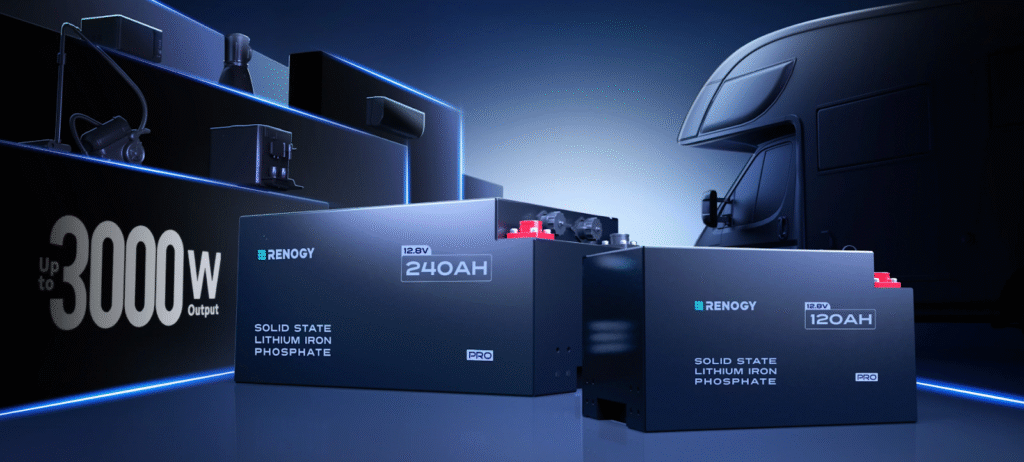
Enter the Renogy Semi-Solid State Battery, a breakthrough that blends chemistry and innovation to create one of the safest and most advanced energy-storage solutions available today. Building on the strengths of LiFePO4 while overcoming its technical constraints, Renogy’s new design offers British consumers a smarter, cleaner, and more durable way to store energy — aligning perfectly with the UK’s clean-energy ambitions.
From LiFePO4 to Semi-Solid State – A Leap Forward in Energy Storage Evolution
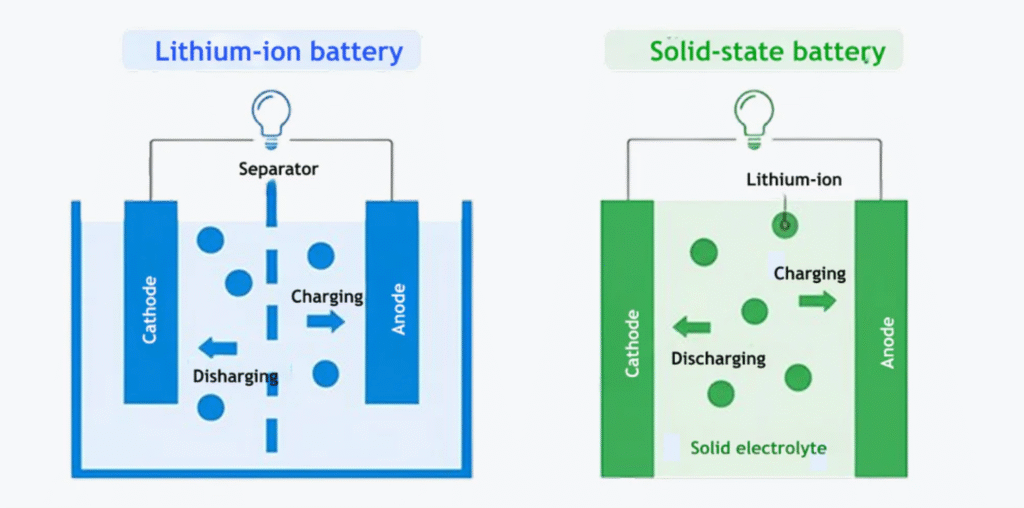
To understand how Renogy’s semi-solid state technology represents a milestone in energy storage, it helps to look at how battery chemistry has evolved over the years — and to first understand lifepo4 battery technology and why it matters. Traditional lithium-ion batteries, which dominated early consumer electronics and electric vehicles, rely on liquid electrolytes that conduct ions between the cathode and anode. While effective, these liquids are highly volatile and flammable — a known safety concern that can lead to short circuits, overheating, or even fire if damaged.
LiFePO4 batteries improved on that model by replacing the reactive cobalt-based cathode with iron phosphate, making them far safer and more thermally stable. This chemistry quickly became a favourite in residential solar storage and portable power systems across the UK. Homeowners valued the peace of mind these batteries brought, particularly when installed indoors or in confined spaces.
However, as renewable energy usage grows in the UK, with solar capacity increasing by over 30% in 2024 according to industry estimates, users are demanding batteries that can hold more power, charge faster, and operate efficiently across wider temperature ranges. British weather — from cold, damp winters in Scotland to warm, humid summers in the South — can be harsh on conventional batteries. Performance dips, capacity losses, and limited longevity often occur when systems face such environmental challenges.
This is where semi-solid state battery technology steps in. The innovation lies in its electrolyte — a gel-like hybrid material that is part solid and part liquid. This structure merges the safety benefits of a solid-state system (the same principle behind what is solid-state battery research) with the flexibility and high conductivity of traditional lithium designs. The result is a battery that not only withstands the UK’s diverse conditions but also provides a longer lifespan and faster charging speeds without compromising safety.
Renogy’s Commitment to Smarter, Safer Power
Renogy, already a trusted name among British solar and off-grid enthusiasts, has long been known for its reliable LiFePO4 battery series. Many UK campervan owners, marine travellers, and rural homeowners rely on Renogy for powering their adventures or keeping their properties running during outages. The company’s latest move into semi-solid state technology reinforces its role as a pioneer in safe, renewable power.
What sets the Renogy Semi-Solid State Battery apart is its focus on intrinsic safety. The gel-like electrolyte acts as a physical barrier that prevents internal short circuits, even under mechanical stress. In contrast to liquid systems that can leak or combust, this semi-solid material remains stable and non-flammable — even when punctured or exposed to heat. For users in the UK who install batteries in garages, lofts, or small caravans, this level of safety is invaluable.
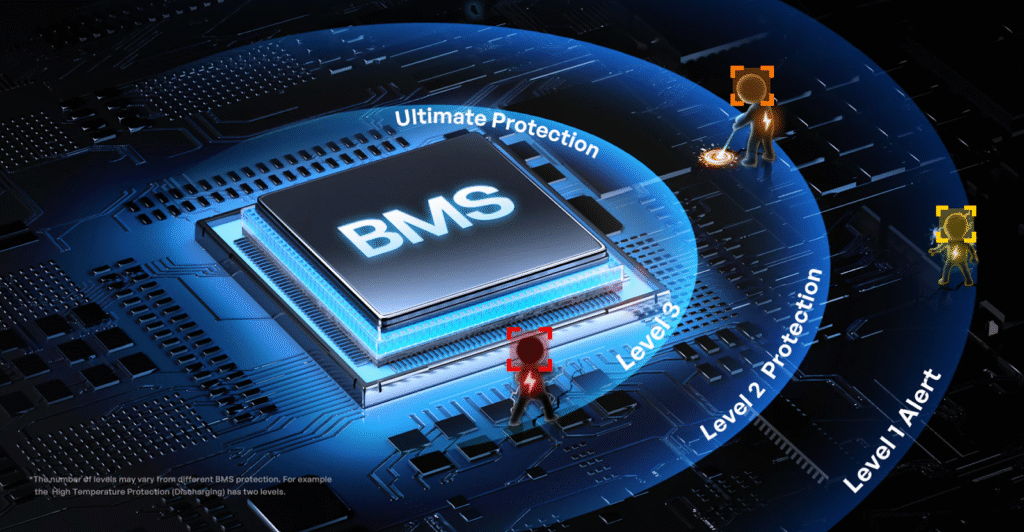
Renogy has also equipped its batteries with an advanced Battery Management System (BMS) — a smart digital layer that continuously monitors voltage, current, and temperature. The BMS automatically adjusts power delivery to prevent overcharging, overheating, or deep discharge, ensuring every cell operates at peak efficiency. This technology not only improves performance but significantly extends the battery’s lifespan, giving users better value for money.
Environmental sustainability is another cornerstone of Renogy’s philosophy. The semi-solid electrolyte used in the new batteries is non-toxic and recyclable, reducing long-term ecological impact. Combined with the brand’s commitment to clean manufacturing and eco-friendly packaging, this innovation supports the UK’s broader shift toward circular economy principles, where products are designed for minimal waste and maximum reuse.
The Relevance of Semi-Solid State Batteries in the UK Market
The UK’s energy landscape is changing fast. The number of residential solar installations surpassed one million in 2024, and the government’s incentives for EV charging infrastructure continue to expand. However, the country still faces challenges in energy storage capacity — how to efficiently capture and retain renewable energy when sunlight or wind availability fluctuates.
Battery storage plays a critical role here. With Renogy’s semi-solid state technology, British households and businesses can now enjoy safer and more efficient storage systems capable of holding excess solar energy during the day and supplying it at night. This reduces reliance on the National Grid and helps lower household energy bills.
For off-grid users, such as those living in remote Scottish Highlands or travelling in motorhomes across the Welsh countryside, having a durable and climate-resilient battery is essential. The semi-solid design performs consistently in both freezing and high-temperature conditions — a feature few conventional batteries can match.
Additionally, as more electric vehicle owners in the UK seek ways to store renewable power at home, technologies like Renogy’s semi-solid state system provide a safe and compatible solution for charging EVs using solar energy. The potential for home energy independence is closer than ever before.
Semi-Solid State vs Lithium-Ion – The Clear Safety Advantage
Safety remains a top concern for both residential and commercial energy users in Britain, particularly as battery systems become integral to powering homes, electric vehicles, and renewable energy setups. Traditional lithium-ion batteries, which still dominate many consumer electronics and older storage systems, rely on flammable liquid electrolytes. While effective at conducting ions, these liquids are inherently volatile — meaning they can ignite or explode if the cells are damaged, overcharged, or exposed to extreme heat.
This vulnerability has been a critical limitation for users who demand consistent, long-term energy stability, especially in the UK’s variable climate. From freezing nights in the Scottish Highlands to sweltering heatwaves in southern England, temperature fluctuations can place immense stress on conventional lithium-ion systems, accelerating degradation and raising safety risks.
By contrast, Renogy’s Semi-Solid State Battery virtually eliminates these hazards. The core difference lies in its gel-based semi-solid electrolyte, which acts as both a conductor and a stabiliser. Unlike liquid electrolytes that can leak or ignite, this gel material remains securely contained, even under mechanical stress or puncture. It prevents internal short circuits, limits thermal runaway, and provides unmatched chemical stability — even when the battery is pushed to its operational limits.
Another key safety advancement is the prevention of dendrite formation — microscopic metallic filaments that can grow inside conventional lithium batteries and cause dangerous short circuits. In Renogy’s semi-solid system, the thicker gel electrolyte physically blocks dendrite growth, ensuring far greater longevity and reliability over thousands of charge cycles.
But the benefits extend beyond safety. From a performance standpoint, the Semi-Solid State Battery vs Lithium-Ion comparison highlights a clear technological leap. The semi-solid design boasts higher ionic conductivity, enabling faster charging and more efficient energy transfer. For UK homeowners using solar arrays that experience intermittent sunlight, this means reduced energy loss and more consistent power availability — even on cloudy days.
Performance That Outlasts Expectations
While the spotlight often falls on safety, the performance improvements of Renogy’s semi-solid design are equally impressive. Each cell provides a higher energy density, meaning it can store more energy in a smaller, lighter form factor. For UK consumers, that translates to compact installations that fit neatly into homes, garages, or vehicles without taking up much space.
The enhanced conductivity of the gel electrolyte supports faster charging with minimal heat generation — a major benefit for users relying on solar or wind energy, where charging cycles depend heavily on weather conditions. Homeowners can recharge batteries more efficiently during daylight hours and still have ample energy reserves for the evening.
Another advantage is cycle life longevity. The semi-solid structure minimizes wear and tear on internal materials, allowing the battery to endure thousands of charge cycles while maintaining over 90% capacity. This durability means lower replacement costs and less electronic waste — aligning perfectly with the UK’s focus on sustainability and resource efficiency.
Temperature resilience is another key differentiator. Whether installed in a chilly barn in Yorkshire or a sun-drenched campervan in Cornwall, the Renogy Semi-Solid State Battery maintains steady voltage and reliable performance. Its ability to operate efficiently across both sub-zero and high-heat environments makes it ideal for a wide range of UK applications.
Powering the UK’s Green Revolution
The UK’s renewable-energy revolution is not just about installing solar panels or wind turbines; it’s about ensuring that the energy generated is stored and used efficiently. With electricity prices remaining volatile and power-grid demand steadily rising, smart storage solutions like Renogy’s semi-solid technology can help stabilize supply and make renewable energy practical for everyday use.
For British homeowners, this means greater energy independence — the ability to generate, store, and consume their own power without full reliance on external suppliers. For small businesses, it means resilience — being able to continue operations during outages or peak grid times. And for eco-minded travellers, it means mobility — clean, reliable power wherever they go.
Moreover, as more communities across the UK embrace microgrid systems — localized energy networks powered by renewable sources — technologies like the semi-solid battery will play a pivotal role in balancing supply and demand efficiently. It’s an innovation that supports not only individual consumers but the nation’s broader decarbonization efforts.
A Vision for the Future – Innovation Meets Sustainability
Renogy’s investment in semi-solid state research underscores a broader global trend: the shift toward smarter, safer, and more sustainable energy systems. But its relevance to the UK market is especially strong. Britain is emerging as a hub for clean-tech innovation, with universities, startups, and energy firms all exploring the next generation of power solutions.
The semi-solid battery complements this ecosystem by offering a commercially viable alternative to fully solid-state systems, which, while promising, remain prohibitively expensive for widespread use. By bridging the gap between affordability and high performance, Renogy provides a solution that can be scaled quickly across residential, commercial, and mobile applications.
From remote cottages in the Scottish Highlands to eco-friendly offices in London, Renogy’s semi-solid state technology represents a practical way forward for anyone committed to sustainability. It’s not just a product — it’s part of a movement toward energy systems that are cleaner, safer, and more efficient than ever before.
Conclusion – Redefining Energy Storage for a Cleaner UK
The journey from LiFePO4 to semi-solid state marks a pivotal shift in the story of battery innovation. For the United Kingdom, where the path to Net Zero requires scalable, safe, and sustainable energy infrastructure, Renogy’s latest advancement could not be more timely.
By combining the proven reliability of LiFePO4 with the next-generation performance of semi-solid state technology, Renogy has created a battery designed for the real-world needs of modern Britain. It’s a system that offers homeowners confidence, businesses reliability, and the nation as a whole a safer route to achieving its renewable-energy goals.
As the UK continues to embrace electrification — from EVs to home solar — energy storage will define the pace of progress. The Renogy Semi-Solid State Battery stands as a testament to what’s possible when innovation and sustainability meet. It embodies the promise of a future where energy is not only abundant and efficient but also safe, stable, and environmentally responsible.